
- NPS loop distance
- 1 mile / 1.6 km
- NPS elevation gain
- Approximately 50 feet / 15 metres
- Route form
- Paved loop with eastern and western approaches
The walk you are choosing
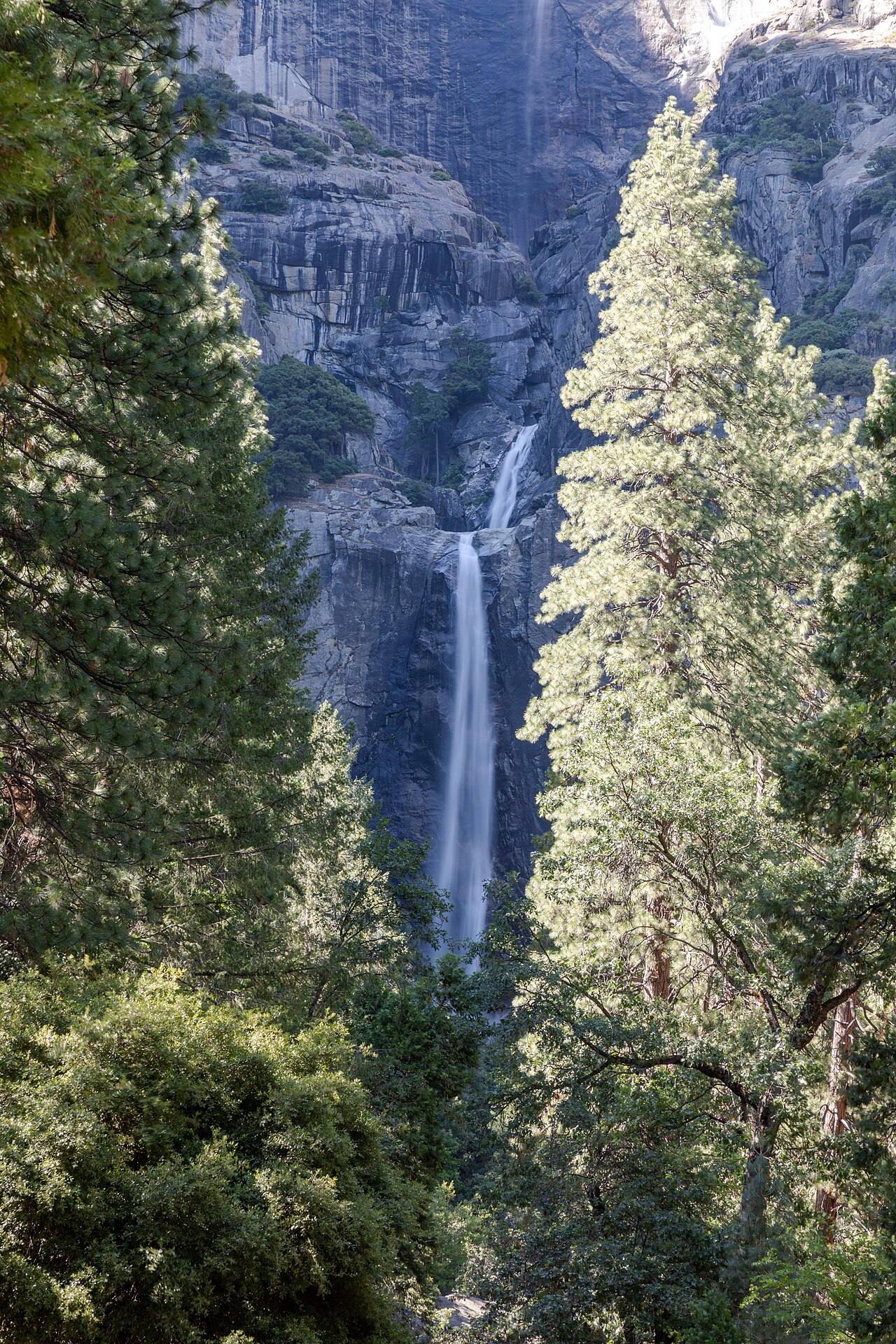
Lower Yosemite Fall is the valley-floor waterfall walk, not the beginning of an abbreviated ascent to the top of Yosemite Falls. That distinction matters when comparing names on a map. This outing brings you toward the lower waterfall viewing area and returns along a paved circuit. The separate Upper Yosemite Fall Trail involves a substantial climb. A visitor wanting a short encounter with the waterfall landscape should choose the lower loop deliberately rather than assume that every trail labeled Yosemite Falls describes the same experience.
The National Park Service lists the complete lower loop as one mile, with approximately fifty feet of elevation gain. Those figures explain its modest overall scale, but the route still deserves a closer reading. The two sides approach the viewing area differently, and pavement does not mean that every short section has an identical slope. For a group with specific mobility requirements, read the park's detailed accessibility information rather than relying on the easy classification alone.
Understand the two approaches
For the complete circuit, begin on the western branch and return on the eastern branch: NPS recommends clockwise walking for the sequence of waterfall views. The west side aligns with the falls early, while the east side supplies the gentler approach identified for wheelchair users when free of snow and ice. These are two different decisions. Choose the clockwise loop for the full viewing sequence; choose an eastern out-and-back when the gentler line matters more than completing a circuit. Neither version begins the separate climb to Upper Yosemite Fall.
If somebody in your group is using a wheelchair or needs a gentler approach, examine the eastern route specifically. The park distinguishes its accessibility from the steeper final portion of the western approach. A good decision might be a carefully selected out-and-back rather than the entire loop. That is a complete visit, not a failed circuit. Confirm the route's current suitability through the official accessibility description and on-site guidance, particularly when weather has changed the surface.
Make the viewing bridge the destination
The bridge and established viewing area provide a clear objective. Approach them as the endpoint of your outward walk, pause where visitors are meant to stand, and then continue the marked circuit or return along the branch you selected. The boulder field beyond the route is not an alternative trail to a better viewpoint. Its visual proximity to the waterfall can make an off-path detour look small even though the ground is completely different from the paved approach.
Photographs work best when their location follows the route rather than determines it. Before taking a picture, find a position that leaves room for others to pass. If the bridge is busy, wait without blocking the narrowest part. A wider view from the approach can explain the waterfall's setting better than a close image at the bridge. You do not need to leave the maintained viewing area to make the visit worthwhile or to create a useful record of the landscape.
Water changes the experience
The name of the trail remains the same while the waterfall's appearance changes. Yosemite Falls is strongly seasonal, and the lower fall can be reduced to a small flow or be dry during part of the year. This guide does not predict the amount of water on your visit. If seeing an active waterfall is the sole purpose of the outing, consult official park information shortly before deciding how prominently to feature this walk in the day.
A visit with little water can still be an informative landscape walk. Look at the shape of the rock channel, the relationship between the creek and the surrounding trees, and the way the trail frames the upper cliffs. That is a different experience from standing beside a loud waterfall, so set expectations honestly. Families and first-time visitors will enjoy the stop more when nobody has promised a particular version of the photograph in advance.
Use the short distance well
A small circuit is valuable because it leaves room to observe. Read the exhibits, compare the views from the two approaches, and notice how the upper waterfall disappears or reappears as your position changes. This is a useful introduction to Yosemite's vertical scale without requiring a mountain ascent. Someone who normally enjoys strenuous hikes can still gain something by slowing down here instead of treating the loop only as a task to finish before a larger objective.
Separate trail time from the complete outing. Reaching the trailhead from where you began the day adds walking, and a group may spend considerable time at the viewing area or exhibits. Do not schedule the next activity immediately after an assumed minimum walking time. If you have a fixed commitment elsewhere, decide whether the full loop or a shorter visit fits comfortably before leaving. The flexibility of this route is most useful when the rest of the day is not packed to its limit.
Choose a companion walk with a different purpose
Cook's Meadow is a natural comparison for another modest valley-floor outing: it concentrates on broad views across an open meadow rather than close access to a waterfall. Combining the two can make sense if you want contrasting perspectives and have resolved the connecting walk on a map. The combination should not be presented as a single one-mile outing, because the lower loop's published distance applies only to that loop.
Alternatively, let this be the day's only named trail and spend the remaining time looking around the valley. There is no requirement to add a longer climb because the loop feels manageable. Choose the Upper Yosemite Fall Trail on another day only if its climbing and return match the group. The lower walk is useful precisely because it gives people a separate way to engage with Yosemite Falls, with a defined route and a destination that does not depend on reaching the top.
Questions answered
Is Lower Yosemite Fall the same hike as Upper Yosemite Fall?
No. The lower loop is a short valley-floor walk to the waterfall viewing area. The Upper Yosemite Fall Trail is a separate uphill outing with a very different commitment.
Should I walk the eastern or western side?
For the circuit, both sides form part of the outing. For a selected out-and-back or mobility-specific visit, compare the park's accessibility details; the final western approach is steeper.
Will there always be water at Lower Yosemite Fall?
No. Flow changes seasonally. Use official park information for conditions near your visit and avoid building the whole day around an assumed waterfall appearance.
Sources & scope
Route facts are drawn from the resources below. The comparisons and recommendations are our research-based editorial analysis; this is not a claim of personal trail inspection. Access and conditions must be checked with the responsible land manager before travel.
Editorial standards · Explore the destination guides
Found a detail that needs correcting? Send the guide URL and a supporting source so we can review the exact route version.