
Choose the shape of the holiday first
The Lake District is not one central resort surrounded by interchangeable trailheads. Its valleys and lakes divide walking into clusters. A short map distance across the high central ground can conceal an indirect road journey, while several excellent walks may begin from the same town. The most useful first decision is therefore where the walking day should start and what kind of landscape should dominate the stay.
For a compact first visit, choose a cluster with enough variety to provide both a longer day and a lower-intensity alternative. Keswick and Derwentwater offer town-to-fell and shore-based contrasts. Ambleside and Grasmere offer connected settlements, lakes and smaller fells. Ullswater offers a longer lake with distinct northern, eastern and southern perspectives. Wasdale offers a focused western valley and major mountain surroundings. They are different trip shapes, not a ranking of scenery.
Keswick: choose it for clear contrasts from one town
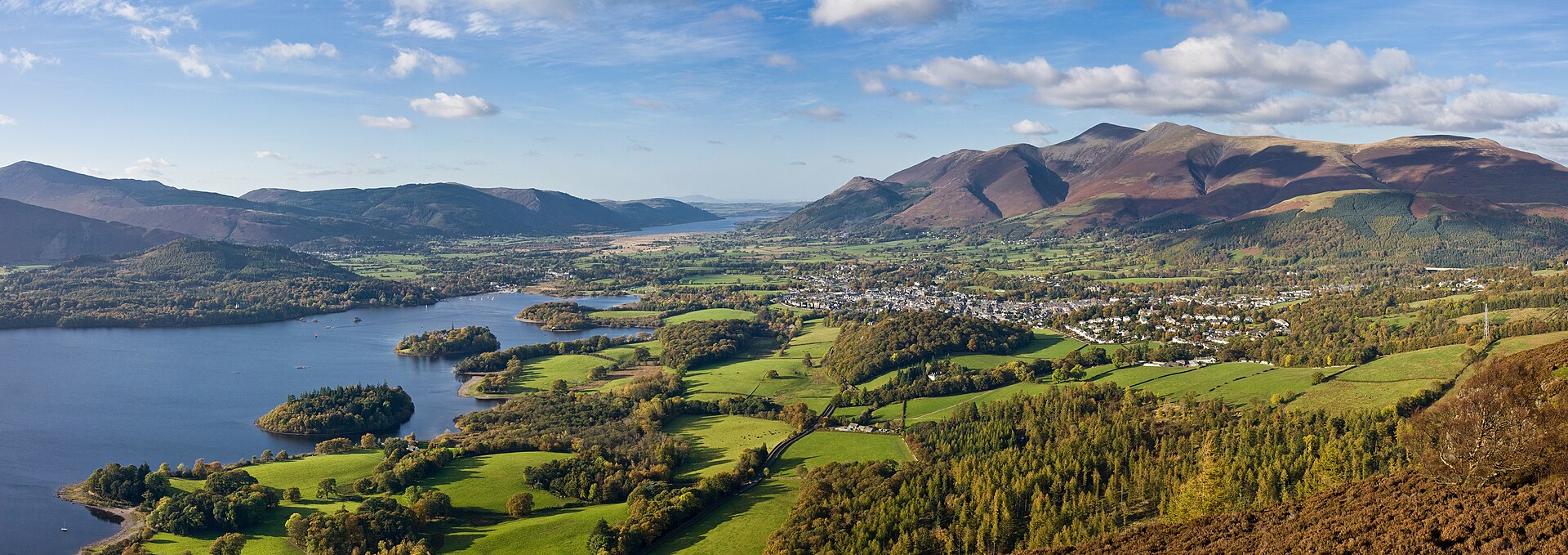
Keswick is a strong first base when the party wants a town-centred stay with different walking environments nearby. Latrigg can serve as an introductory fell view from the town. Walla Crag changes the relationship with Derwentwater by taking the view from the eastern side. The railway path toward Threlkeld gives a different lower-level day. Cat Bells adds a western-shore ridge outing, but its Hawes End approach and return need to be planned rather than assumed to start in the market square.
An example two-day pairing is Latrigg first, then a selected Cat Bells circuit if its rocky ground suits the party. Another is Walla Crag paired with a railway or foreshore walk. The important feature is contrast, not collecting every local summit. A town base works best when it reduces daily decisions about moving accommodation and allows the route choice to respond to the group’s appetite for climbing.
Ambleside–Grasmere: choose it for linked places and lakes
The central southern cluster suits walkers interested in moving between settlements and water as well as reaching a fell viewpoint. From Ambleside, Loughrigg provides an ascent with a return through the terrace landscape. Stock Ghyll Force offers a short woodland outing. Grasmere and Rydal Water provide a separate two-lake day, while the Coffin Route gives a historic slope-side connection rather than another summit.
A useful pairing is one Loughrigg day and one Grasmere–Rydal day. That creates different terrain and purposes without needing to cross the whole park. Do not automatically include Loughrigg summit in the two-lake circuit as well; otherwise both days become variations on the same crowded itinerary. Choose Ambleside if its town-start fell and woodland options are central. Choose Grasmere if the village, adjacent waters and Helm Crag side form the core of the holiday.
Ullswater: choose a shore before choosing a route
Ullswater is long enough that choosing a base on the lake does not settle which walking area is closest. Aira Force and Gowbarrow create a waterfall-and-fell combination on one side. Hallin Fell belongs to the Martindale and eastern-shore landscape. Place Fell from Patterdale relates more naturally to the southern end. These are not all neighbouring short outings simply because each guide uses the word Ullswater.
Choose the southern end when the priority is Patterdale’s valley and fell walking. Choose a more eastern focus when Martindale and a lake-side perspective are the draw. Aira Force can be a specific outing with its own selected route, not a mandatory stop added to every transfer. The strongest first Ullswater plan concentrates on one end and includes a clear lower alternative. Trying to cover the entire long lake in a short stay often produces more connecting travel than useful walking variety.
The western valleys: choose focus rather than a detour
Wasdale and its neighbouring western landscapes are compelling when the holiday is built around them. Scafell Pike via Hollow Stones is a demanding mountain objective, while lower Wasdale and Wastwater provide a separate landscape experience. The key is that this is a western valley stay, not a quick excursion added between two walks based around Ambleside or Keswick.
If Scafell Pike is the principal reason for the trip, organise the base and travel around that objective and retain a lower valley day. If it is only one famous name on a broad shortlist, consider whether a coherent Keswick or Ambleside stay would serve the party better. A first Lake District holiday does not need every iconic place. It needs a sensible base, genuinely contrasting route choices and enough time to understand one part of the landscape before moving to another.
A first three-day stay in Keswick: three different route purposes
A useful three-day Keswick plan can begin with Latrigg from town. The purpose of that first outing is orientation: see how Keswick relates to Derwentwater and the surrounding slopes, while learning how the party feels on a town-to-fell ascent. Keep it as a defined return rather than adding the railway corridor merely because another guide offers a longer loop. The shorter scale can be especially valuable after travel, provided its actual climb fits the group.
For the second day, select either the Cat Bells ridge-and-shore circuit or a Walla Crag outing, not both simply because their summit names are familiar. Cat Bells introduces the western side of the lake and rocky ridge ground. Walla Crag gives an eastern perspective and a different relationship between woodland approach and open fell. Choose through terrain preference and complete return, not by comparing only the peaks’ heights. If the rocky Cat Bells approach is precisely what one companion wants to avoid, it should not remain the default merely because it appears more often in photographs.
Use the third day for a lower perspective: a defined railway-path return toward Threlkeld or a selected Derwentwater shore walk. These are different travel problems. The railway is linear, so the outward goal controls the return distance; a shore route needs its actual start and turning point. The day’s purpose is to experience the basin at close range rather than reach another high point. This creates a stronger three-day holiday than three similarly ambitious summit mornings, because the landscape and the effort both change.
A central-lakes three-day alternative: Ambleside and Grasmere
For a central-lakes stay, make Loughrigg the designated fell day. From Ambleside, choose a complete circuit with the ascent and the terrace-side return understood. Loughrigg Fell, Loughrigg Terrace and Loughrigg Tarn are separate features; combining their names from different route pages does not produce an accurate distance. The aim is one coherent outing with an elevated view over the connected valleys, not a collection of every attractive path on the fell.
A second day can belong to Grasmere and Rydal Water. Select a village-start two-lake circuit, keeping it distinct from the national park’s one-way Ambleside–Grasmere Trail. That distinction resolves a concrete mistake: using a linear trail’s mileage as the total for a circular day. The woodland connections around White Moss are part of the experience and include changes of level, so this is lower walking rather than a promise of a completely flat path.
For the third day, decide between history and a compact woodland outing. The Coffin Route gives a slope-side link between Grasmere and Rydal, with a return to plan separately. Stock Ghyll Force gives a shorter Ambleside-based ascent into woodland and established waterfall viewpoints. They should not be forced into the same day merely to fill time. Choose the historic connection if moving through the valley’s human landscape interests the party; choose the waterfall woods if a smaller walking window and an uncomplicated return suit better.
A week with two bases: the move must earn its place
A seven-day holiday can reasonably contain a Keswick block and an Ambleside–Grasmere block. The benefit is that each block supports several distinct days. Begin with a Keswick orientation walk, choose one larger Derwentwater-side fell outing, then use a lower river, shore or railway day. Move accommodation as a deliberate transition rather than scheduling the longest mountain walk immediately before packing and travelling.
In the central block, give Loughrigg its own day, choose a separate Grasmere–Rydal or Coffin Route outing, and leave room for a compact walk such as Stock Ghyll Force or a carefully chosen Tarn Hows visit. Tarn Hows introduces another start, so its inclusion should be deliberate rather than described as a path directly from Ambleside. The final day does not need to contain the farthest remaining name on the shortlist. A familiar shorter walk can be the better use of a travel day.
The move earns its place because it changes the geographic centre of the holiday. A split made only to stay in two attractive hotels may not improve the walking. Conversely, insisting on one base while repeatedly travelling to the other cluster can create unnecessary friction. Plot the actual route starts and choose the accommodation pattern that removes repeated journeys. This gives the week a clear progression through two landscapes without pretending that every day must cover a new region.
Three specific choices for a mixed-ability party
First distinguish limited appetite for distance from a dislike of rough ground. These are different requirements. Someone may enjoy a long firm route but prefer to avoid Cat Bells’ rocky ridge. Another walker may be comfortable with uneven surfaces but want a shorter day. A route labelled easy or moderate cannot resolve both questions. Write the limiting requirement before selecting the walk, then use the detailed terrain description.
Second distinguish a common day from a split day. A group sharing one outing should choose an objective that everyone actually wants, such as a selected Tarn Hows circuit or a lower river walk. Do not keep a summit as the unspoken standard and tell the less enthusiastic person they can wait somewhere. If separate outings are genuinely desired, they need separate start, finish and coordination plans. The social arrangement is part of travel planning, not something a trail’s distance can settle.
Third choose shorter goals that are real routes. A partial out-and-back on the railway corridor can be planned around an identifiable turning point. The main Tarn Hows gravel loop can be kept separate from the optional higher extension. Aira Force’s gorge visit can remain distinct from the full Gowbarrow circuit. These are useful adjustments because their scope can be described clearly. A line drawn across the middle of a mountain loop is not an equivalent alternative simply because it looks shorter on a map.
How to keep the trip low-maintenance without relying on stale information
Build the itinerary around stable geography and route purpose: which valley, which start, which kind of ground and which return. Avoid making its success depend on a precise boat departure remembered from an old blog, a claim about current parking availability or an assumed road-opening date. Those operational details belong with the responsible operator or land manager when the travel day approaches. A strong evergreen plan makes those dependencies visible instead of embedding information that will quietly age.
For example, a Cat Bells day that requires a boat connection should identify Hawes End and the actual walking finish, while the operator supplies current service information. A linear Coffin Route day should name its two ends and establish how the return will be completed. A Wasdale mountain day should account for the journey into the valley rather than treating it as a small extension from a distant base. These are durable planning decisions even though the operational checks attached to them remain current tasks.
Finally, allow the shortlist to stay selective. The Lake District offers far more than one first holiday can cover. Keeping a route for another visit is not lost value when it lets the present trip remain coherent. A good first stay leaves you able to explain the landscape you walked: where the water sits, how the valleys connect, why one route demanded a climb and another stayed low, and which part of the region you would genuinely like to understand next.
When Ullswater should replace the central-lakes plan
Choose Ullswater instead of adding it when the long lake and its eastern or southern fells are the experiences that most interest you. The difference is important. Replacing one cluster gives time to understand another; adding it to an already full first visit can leave only a rushed stop beside the road. Patterdale and Glenridding place you at the southern end, while the Martindale side gives a different relationship with Hallin Fell and the eastern shore. Aira Force and Gowbarrow sit within their own route geography.
A focused Ullswater stay could pair a chosen lower shore or valley walk with one defined fell objective. The exact pairing should follow the base rather than reverse it. If Place Fell from Patterdale is the desired mountain day, organise around that southern start. If Hallin Fell and Martindale are the draw, do not assume a southern-end accommodation choice makes them a doorstep outing. The lake’s name is broad enough to conceal these differences, so keep the settlement names visible throughout planning.
The same reasoning helps decide whether the full Ullswater Way is relevant. A long named route around a lake is not automatically the right answer for someone seeking a relaxed selection of day walks. Its complete length, partial sections and any separate return connections create different outings. Select a segment for its actual start, finish and landscape if that is what you want. Do not borrow the prestige of a full-route name to describe a much shorter walk, or use a short section’s description to underestimate the whole.
A final shortlist that is small enough to use
Before committing accommodation, reduce the first-trip plan to a main cluster, one principal higher objective, one lower day and one shorter option. Give each a named start and return. If the list still depends on moving between Keswick, Wasdale, Ullswater and Coniston in a few days, it is a touring wish list rather than a focused walking holiday. Either lengthen the trip or decide which landscape matters most.
This small shortlist is not a limit on what you may discover. It is a way to make the initial decisions concrete enough to review. Once the base and route types make sense, additional choices can be assessed against them. The result is a holiday built around time on useful paths and meaningful contrasts, with fewer mornings spent trying to make an oversized map of ambitions fit the day.
Questions answered
Can one base cover the entire national park?
It can be used as a place to sleep, but that does not make every walking area equally convenient. For a short trip, choose the routes around one geographic cluster rather than relying on straight-line map distances.
Which is the simplest first choice?
Keswick or the Ambleside–Grasmere cluster are strong candidates when their route styles match the party. Decide between town-to-fell contrasts and linked lake-and-village walking rather than looking for a universal winner.
Sources & scope
Route facts are drawn from the resources below. The comparisons and recommendations are our research-based editorial analysis; this is not a claim of personal trail inspection. Access and conditions must be checked with the responsible land manager before travel.
- Lake District National Park: Keswick and Derwentwater
- Lake District National Park: Grasmere and Rydal
- National Trust: Wasdale walking landscape
Editorial standards · Explore the destination guides
Found a detail that needs correcting? Send the guide URL and a supporting source so we can review the exact route version.