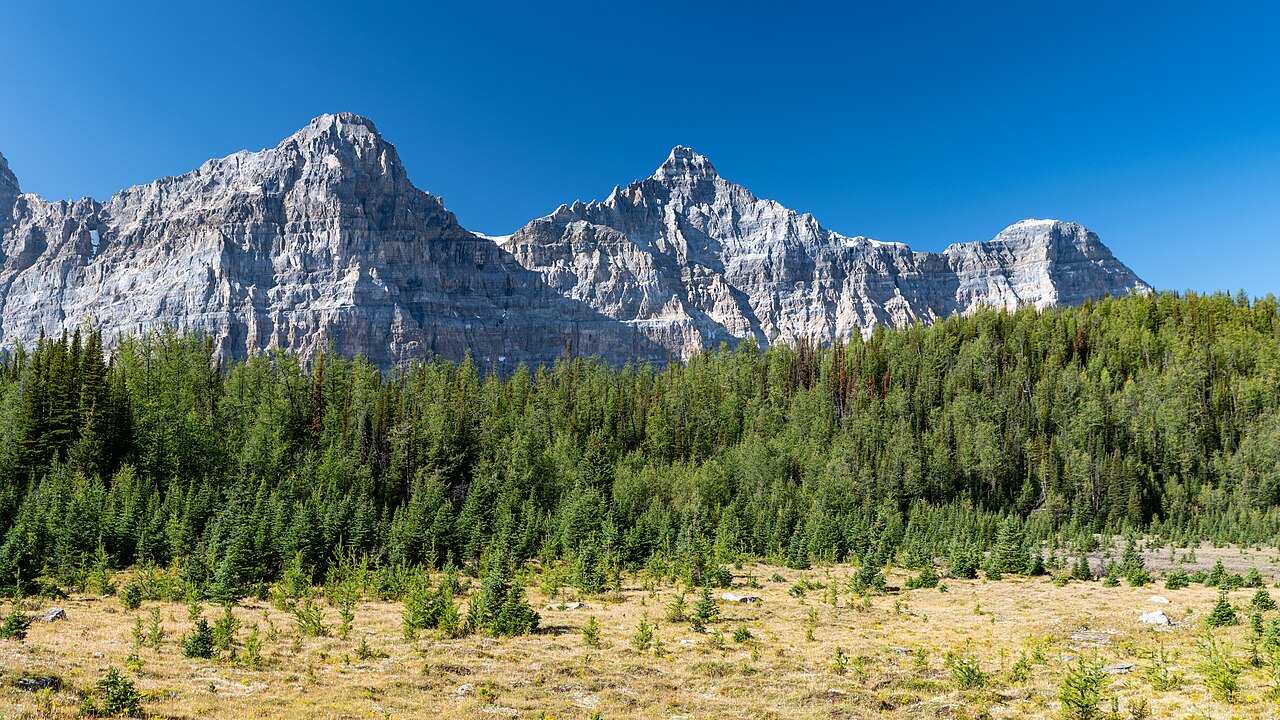

Choose the valley as the destination
Larch Valley is a complete hiking objective above Moraine Lake. It should not be presented simply as the easy part of a mandatory Sentinel Pass day. The valley's landscape provides its own reason to climb: the transition from the lakeside setting into larch country and a wider alpine basin. A visible pass beyond the chosen endpoint does not make the outing incomplete. It introduces a different objective with additional height, terrain and return effort.
This distinction matters most when you are choosing a first substantial Moraine-area hike. If the larch landscape is the experience you want, build the day around it. If a high pass is central to your interests and capability, research Sentinel as the full outing from the start. Avoid arriving in the valley with no agreement about which destination the group has actually selected.
The climb belongs to the experience
For Larch Valley/Minnestimma Lakes, the official directory lists 4.5 kilometres one way, 570 metres of ascent and 10 metres of descent, with a 3.5-to-four-hour return estimate. Retracing the selected line means nine kilometres of walking, before an additional pass objective. That is already a substantial climb from Moraine, not the gentle part of a compulsory larger route. Choose it as the main outing when the larch landscape is the desired reward. If Sentinel is essential, use the separate full pass itinerary rather than treating the valley's figures as though they include the final ascent.
Pace the approach so that the destination is more than a quick rest before retreat. The purpose of climbing is to spend time in the higher setting. A schedule that allows only the minimum moving time can encourage a rushed arrival photograph and a hurried descent. Leave room for observing the spacing of trees, the surrounding peaks and the basin's changing perspective from the established path.
Eiffel Lake is an alternative, not another name for the valley
The Eiffel Lake route branches from the Larch Valley approach. That shared lower section can make the two routes look interchangeable in a search result, but their rewards differ. Larch Valley emphasises the higher larch landscape and the basin towards Minnestimma Lakes. Eiffel is the option to investigate for a traverse along the valley side and views towards its named lake. Choosing between them should be about that difference, not simply which title sounds more famous.
For a first visit, select one as the principal day. Combining all possible branches can turn an understood outing into an accumulating list of extensions. If you do want a larger combination, research its full map and total effort rather than adding two descriptions whose shared sections and endpoints differ. A clear destination gives the group a more useful plan than a flexible promise to see how many routes fit.
A three-way decision above Moraine
The most conservative sensible choice is not always the shortest-looking name on the map. It is the route whose terrain and complete return you understand. For a group attracted mainly by trees and broad mountain scenery, Larch Valley is a coherent endpoint. For a group drawn specifically to the pass, the pass must be assessed as the actual day's objective.
Swipe the table horizontally to compare every column.
| Objective | Primary appeal | Commitment to understand |
|---|---|---|
| Larch Valley | Larch landscape and the alpine basin | The full climb from Moraine and return |
| Eiffel Lake | A valley-side route with a different lake perspective | The chosen branch and its own endpoint |
| Sentinel Pass via Larch Valley | A higher pass beyond the valley experience | Additional steep ground and climbing beyond the valley |
Larch colour is a seasonal event, not a booking guarantee
Autumn photographs can make the outing appear to depend on one perfect golden week. Avoid building the entire visit around an exact colour date. Trees respond to seasonal processes, and conditions at higher elevation may differ from those at your base. A past photograph proves that a colour occurred, not that it will occur on your reserved travel date. Keep the hiking plan flexible enough to select an appropriate route when you are there.
The landscape also has value beyond peak autumn colour. If you enjoy the relationship between trees, open ground and mountain walls, the route is not merely a viewing platform for a single seasonal effect. Decide whether that wider experience interests you before choosing it. Someone who only wants an autumn photograph may be better served by a flexible itinerary than by treating one trail and date as a guaranteed product.
The pass visible ahead is not a casual add-on
High terrain often looks compact from below. The last visible rise can seem like a small extension after a substantial approach, especially when other walkers continue. That social cue is not an assessment of the route for your group. If you planned Larch Valley, enjoy the destination and return as planned. If you planned Sentinel, retain enough time and energy for the additional terrain and its descent.
Do not extend onto unrelated summit or scrambling routes because their names appear on a nearby map. The valley walk, pass hike and technical mountain objectives are separate activities. A holiday does not need to progress automatically from one to the next. Knowing where the selected outing ends is part of informed planning, not evidence of a lack of ambition.
A complete return to the lake
The descent returns you through the transition that made the approach rewarding. Allow it attention rather than regarding it as transport back to your onward connection. A fixed travel arrangement can create pressure if the day's plan was based on an optimistic time estimate. Keep the route's effort and the separate arrangements for reaching Moraine Lake visible in the same schedule without confusing them.
Consult current Parks Canada reports for conditions and restrictions before choosing the outing on your date. This guide does not give colour forecasts, access windows or a snow-free promise. Its enduring recommendation is to select Larch Valley for its own landscape, distinguish it from the Eiffel branch and Sentinel extension, and let the whole route rather than a famous autumn image determine the day.
Questions answered
Have I completed Larch Valley if I do not climb Sentinel Pass?
Yes. A valley-focused outing is a complete plan. Sentinel is a higher destination with additional demands, not a required finish.
Should I combine Larch Valley and Eiffel Lake?
Only if you have researched that actual combined route and its full effort. They share an approach but provide different experiences and should not be casually added together.
Sources & scope
Route facts are drawn from the resources below. The comparisons and recommendations are our research-based editorial analysis; this is not a claim of personal trail inspection. Access and conditions must be checked with the responsible land manager before travel.
- Parks Canada: Larch Valley, Eiffel and Sentinel route relationships
- Official tourism: Moraine-area route comparison
- Official tourism: autumn larch landscape
Editorial standards · Explore the destination guides
Found a detail that needs correcting? Send the guide URL and a supporting source so we can review the exact route version.